
By :Noah Chen – Pop Culture & Viral Trends Hunter ( No Kings Protests 2026 )
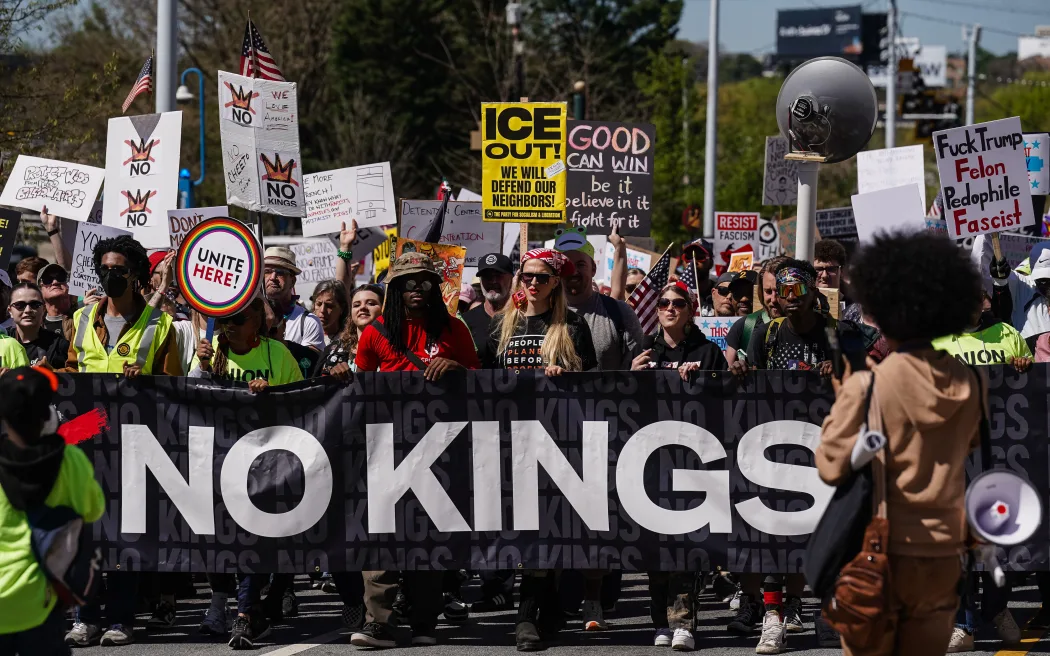
March 29, 2026 — On Saturday, March 28, 2026, hundreds of thousands of Americans — organizers estimate millions — took to the streets in a coordinated day of action under the banner of the No Kings protests. From bustling city centers to quiet small towns, more than 3,300 demonstrations unfolded across all 50 states and several international locations, marking the third major wave of the No Kings protests 2026 movement.
This nationwide mobilization, organized primarily by progressive coalitions including Indivisible and 50501, represented one of the largest single-day displays of public dissent in recent U.S. history. Protesters rallied against President Donald Trump’s second-term policies, with a sharp focus on aggressive immigration enforcement by ICE, the ongoing U.S. war with Iran, skyrocketing living costs, and what many described as authoritarian overreach. The slogan “No Kings” evoked a rejection of concentrated executive power, echoing foundational American ideals of democracy over monarchy.
As live coverage from CNN and other outlets captured the scale, the protests remained largely peaceful, with only isolated verbal confrontations reported. High-profile speakers, celebrity appearances, and grassroots energy defined the day, amplifying calls for policy change and civic engagement ahead of future elections.
The Origins and Evolution of the No Kings Protests 2026
The No Kings protests movement emerged in 2025 as a direct response to the early actions of President Trump’s second administration. What began as localized demonstrations quickly scaled into a national phenomenon. The first wave in June 2025 coincided with Trump’s birthday and drew millions, effectively overshadowing official events and framing the protests as a people-powered counter-narrative to perceived executive excess. A second round in October 2025 mobilized over seven million participants across more than 2,700 events, solidifying the movement’s infrastructure. by : theguardian.com
By March 2026, the third iteration — often called “No Kings Day 3.0” — had evolved into a more mature, decentralized network. Organizers like Ezra Levin of Indivisible emphasized accessibility: events were planned not just in blue strongholds but deliberately in Republican-leaning suburbs and rural communities. Nearly half of the 3,300+ protests occurred in GOP or battleground areas, signaling broadening discontent even in traditionally conservative regions. by : time.com
The movement’s name draws from America’s revolutionary roots — a declaration that no individual, regardless of office, should rule like a king. As Levin stated in pre-event interviews, the rallies serve as “a place for everybody to come and exercise their rights as Americans in a patriotic and safe way.” The focus keywords No Kings protests nationwide and No Kings protests 2026 trended heavily on social media throughout the day, with hashtags amplifying videos of marches, chants, and signs reading “End the Wars,” “Stop ICE,” and “Power to the People.”No Kings Protests 2026
“For a detailed timeline of the movement’s growth, read our related analysis: The Rise of the No Kings Protests: From 2025 to 2026.”
Scale and Geographic Reach: Protests in Every State
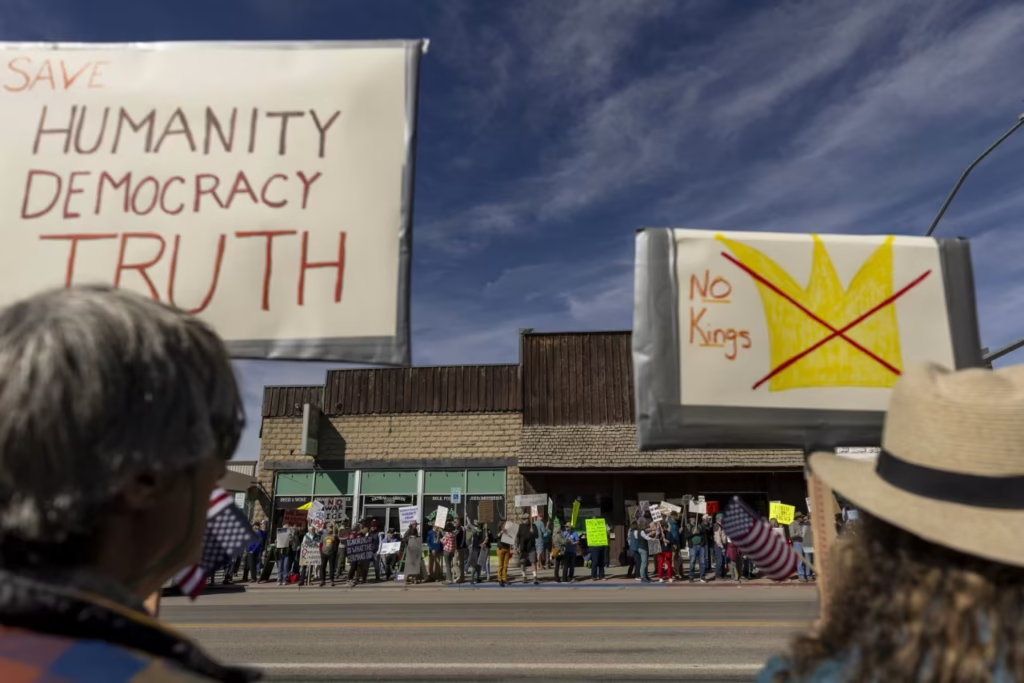
Saturday’s events were remarkable for their breadth. Protests spanned major metropolitan areas, suburban neighborhoods, and remote communities — from Kotzebue, Alaska (inside the Arctic Circle) to Boynton Beach, Florida. Organizers reported events in all 50 states, with additional solidarity actions in more than a dozen countries including Canada, Mexico, the UK, and Australia.
Key locations included:
- Minnesota (St. Paul State Capitol): The marquee flagship event drew an estimated 100,000+ attendees. Gov. Tim Walz delivered pointed criticism of Trump’s immigration policies. Sen. Bernie Sanders praised the crowd as “what democracy looks like” and warned of a “dangerous moment” in American history. Rep. Ilhan Omar shared her refugee story while condemning “authoritarianism” and operations in Iran, Venezuela, and Ecuador. Cultural icons Bruce Springsteen performed, calling Minnesota an “inspiration to the country,” while Jane Fonda read a statement tied to recent ICE-related incidents. edition.cnn.com
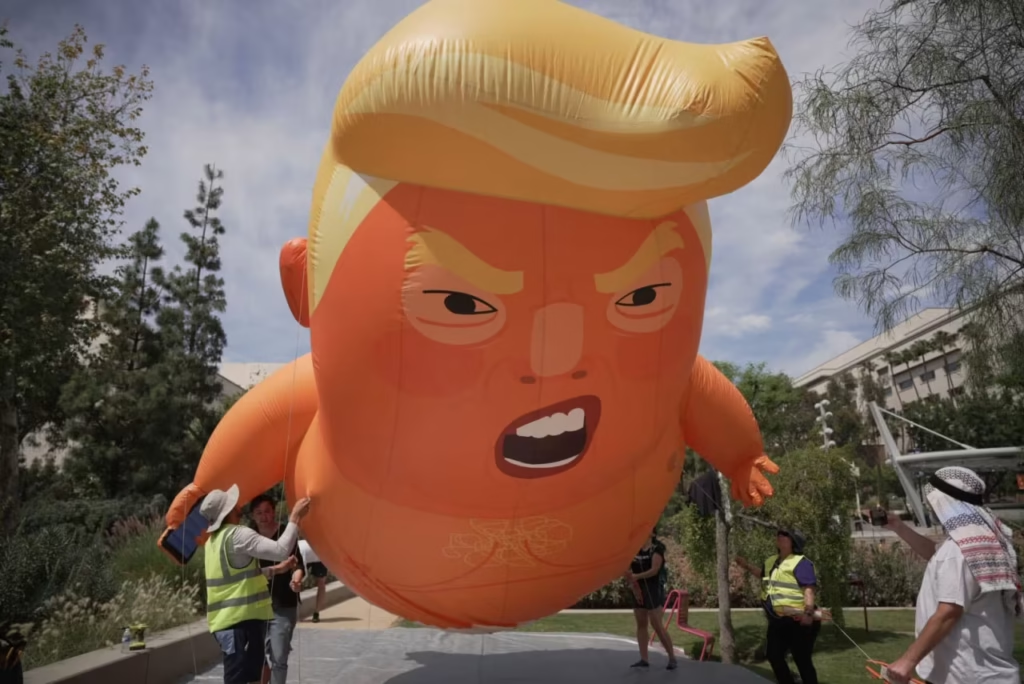
- Los Angeles, California: Thousands gathered near City Hall with salsa music, anti-war signs, and a giant inflatable blimp depicting Trump as a diaper-clad baby. The atmosphere was festive yet resolute.
- New York City (Manhattan): Progressive influencers Hasan Piker and Harry Sisson joined marches through Times Square. Actor Robert De Niro reportedly appeared, criticizing the administration. Colorful signs and flashing billboards dominated the scene.
- Chicago, Illinois: Crowds of all ages marched with costumes, music, and banners demanding “End the wars, stop ICE, May 1 general strike.”
- Portland, Oregon: Tens of thousands flooded Waterfront Park and Naito Parkway, waving flags and chanting to live music.
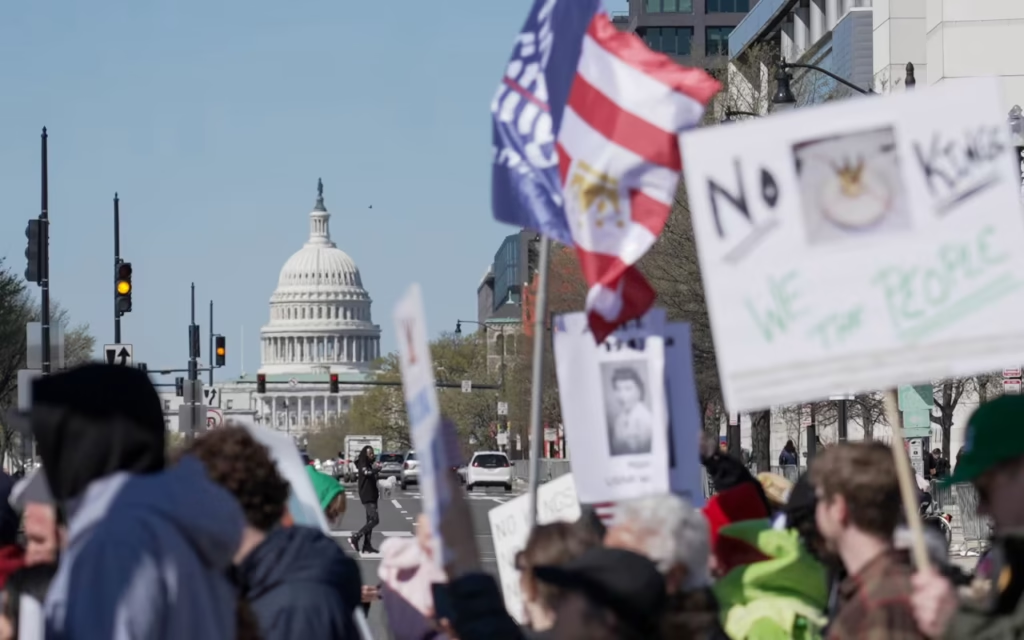
- Washington, D.C.: Protesters raised fists in symbolic defiance near Pennsylvania Avenue.
- Small-town and red-state highlights: Demonstrations in Driggs, Idaho; Clarkesville, Georgia; and even West Palm Beach, Florida (near Trump’s Mar-a-Lago residence), where about 50 counter-protesters in Proud Boys attire engaged in verbal exchanges but were de-escalated by police. In Boynton Beach, Florida, Vice Mayor Thomas Turkin noted the event was “very enthusiastic” and peaceful, with increased patrols ensuring safety.
This geographic diversity underscored a central theme: opposition to Trump-era policies is no longer confined to coastal cities. As one organizer noted, “Idaho, Wyoming, Montana, Utah are all showing up with events in the double digits.”
Core Issues Driving the Protests
At the heart of the No Kings Protests 2026 were three interlocking crises:
- Immigration Enforcement and ICE Operations: Protesters highlighted recent high-profile incidents, including the killings of Renée Good, Alex Pretti, and others during ICE actions. Personal stories, such as Chicago resident Maria Isabel Trejo’s account of fears stemming from a mistaken-identity incident involving her daughter in Portland, humanized the issue.
- The U.S. War with Iran: Now approaching its one-month mark as of late March 2026, the conflict has driven up gas prices (reportedly reaching $4+ per gallon in some areas), disrupted supply chains, and strained the economy. Protesters linked the war to broader foreign policy concerns and domestic hardship.
- Rising Cost of Living and Economic Strain: Skyrocketing fuel and food prices, compounded by a partial federal government shutdown affecting DHS and TSA staffing, fueled widespread frustration. Many signs and chants tied these economic pressures directly to administration decisions
Additional grievances included perceived threats to democratic norms, with some referencing recent shootings by immigration agents and a sense of “creeping authoritarianism.” Demands ranged from immediate de-escalation in Iran to halting ICE “blitzes” and exploring a potential May 1 general strike.
“For the official organizer perspective and event map, visit NoKings.org.”
Peaceful Nature, Minor Incidents, and Public Safety
Law enforcement and organizers alike described the vast majority of events as orderly and non-violent, continuing the pattern from previous No Kings actions.No Kings Protests 2026 Police in several cities increased patrols proactively. In West Palm Beach, verbal altercations with a small group of counter-protesters remained contained. No widespread arrests or significant violence were reported, a point emphasized in live coverage to counter potential narratives of chaos.
This emphasis on peaceful assembly reinforced the movement’s branding as patriotic resistance rather than disruption.
Political and Cultural Resonance
High-profile participation amplified visibility. Beyond politicians like Walz, Sanders, and Omar, cultural figures lent star power. Bruce Springsteen’s appearance in Minnesota drew particular attention, blending music with messaging. Influencers and celebrities helped bridge generational gaps, attracting younger participants via social media.
Public reaction was polarized, as expected. Supporters viewed the protests as a vital exercise of First Amendment rights amid declining approval ratings for the administration. Critics dismissed them as partisan theater. Polling referenced in related coverage showed Trump’s approval dipping amid economic pressures from the Iran conflict.
Broader Implications and What Comes Next
The No Kings protests nationwide on March 28, 2026, arrive at a pivotal moment. With midterm elections on the horizon and ongoing policy battles, the scale of turnout could influence legislative dynamics, especially around war funding, immigration reform, and economic relief.
Organizers have signaled sustained momentum, with calls for continued local actions and potential escalation (e.g., the mentioned May 1 strike). Analysts suggest the movement’s success in red and suburban areas may complicate Republican strategies and energize Democratic base turnout.
Critics from conservative circles argue the protests oversimplify complex policy challenges, while supporters see them as a necessary check on power. Regardless of perspective, the day underscored deep national divisions — and the enduring power of collective civic action.
As coverage wrapped, CNN’s Shimon Prokupecz reflected on the protests’ significance: a nation exercising its voice at a time of uncertainty. For many participants, the message was clear: in America, there are No Kings. No Kings Protests 2026
I’m not that much of a internet reader to be honest but your sites really nice, keep it up! I’ll go ahead and bookmark your site to come back later. All the best